

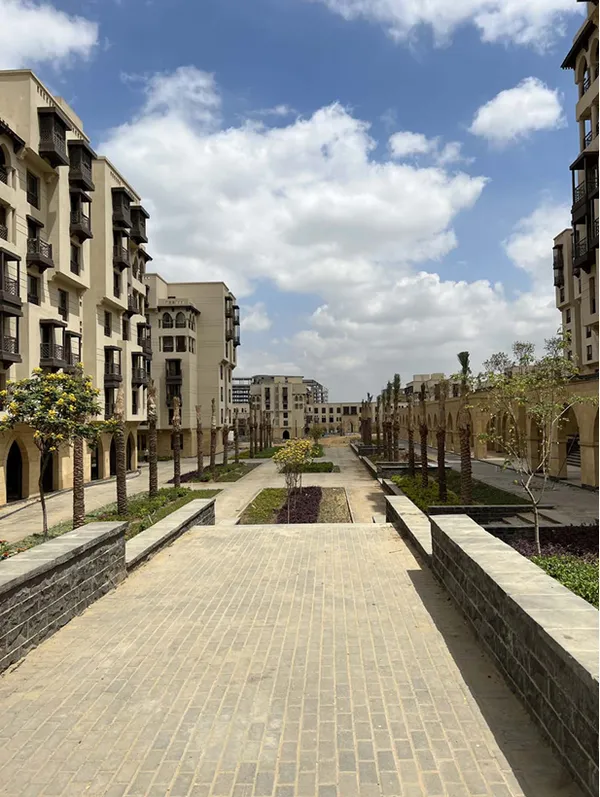
About Old Cairo
Old Cairo Egypt, or Masr al-Qadima in Arabic, is one of the capital's oldest historic districts. It sits in southern Cairo Governorate, on the east bank of the Nile. UNESCO has listed it as "Historic Cairo" since 1979.
People also call it Fatimid Cairo and Old Coptic Cairo. Its story runs from the Roman Babylon Fortress to Al Fustat, Egypt's first Islamic capital. Today, cobbled heritage lanes sit beside modern gated compounds. The result is a rare place to live, invest in, and explore.
Old Cairo Location
Old Cairo lies on the eastern bank of the Nile, in the south of the capital. It falls just south of Downtown Cairo and west of the Cairo Citadel. Administratively, it belongs to Cairo Governorate; here are the exact location details:
- Northern borders: Cairo Aqueduct, known locally as Sur Magra El-Oyoun
- Southern borders: the Ring Road, the area's main link to Greater Cairo
- Eastern borders: Khalifa Cemetery, on the edge of the historic Al Khalifa quarter
- Western borders: the Nile Corniche, Roda Island, and Manial Al-Roda
- Distance to New Administrative Capital: approximately 55 minutes
- Travel time from Mostakbal City: around 55 minutes
- Distance to 6 October City: approximately 45 minutes
- Time taken to New Cairo City: around 35 minutes
- Distance to Cairo International Airport: 30 minutes
- Commuting to Downtown Cairo: approximately 18 minutes
- Distance to Mokattam: 18 minutes
- Time proximity to Maadi: around 16 minutes
Old Cairo Roads
Getting in and out from Old Cairo is simple. Several major routes meet around the district:
- Ring Road
- Salah Salem Road
- Autostradast
- Nile Corniche Road
- Civilization Road
- Wahat Road
- Waslet Dahshour Road
Old Cairo Districts
Old Cairo's history is older than Cairo itself. The area mattered as far back as the Pharaonic era, the Ptolemaic era, the Roman era, and later the Arabs. That layered past shaped the main districts:
- Al Fustat: Egypt's first Islamic capital. It hosts the Amr Ibn Al-As Mosque and modern development projects
- Askar: a neighboring district added later, during the Ayyubid state
- Al Qataa: developed during the Mamluk state, home to the Ahmed Ibn Tulun Mosque
- Al Khalifa: famous for historic mosques and cemeteries
- El Sayeda Zeinab: a lively, popular quarter with full everyday services
- Al-Muizz Street: named after al-Muizz li-Din Allah, founder of the Fatimid Dynasty in Egypt. It is on the UNESCO World Heritage List
- Khan El-Khalili Street: runs parallel to Al-Muizz. It is named after Emir Djaharks Al-Khalili, from El-Khalil city in Palestine. Expect souvenir bazaars, monuments, and historic buildings and gates
- Port Said Street: better known as El Khalig El Masry
- Darb El-Barabra: the famous El-Barabra Alley
- Other well-known streets: Alfy, El-Qalaa, Al-Faggala (Al-Tabbala), Al-Saliba, Khurunfush, Al-Seyoufia, Amir El-Geyosh, Magra El-Oyoun, Qasr Al-Ainy Pasha, Ibn Sender, and Mohammad Ezz Al-Arab
Old Cairo Properties
Old Cairo Egypt, offers space to live and space to work. High-end residential units sit next to practical business space. You can choose from:
Old Cairo Projects
Old Cairo is home to many upscale residential projects. The most well-known among them is El Fustat Compound by Saudi Egyptian Developers (SED):
- It is located close to the Cairo Citadel and the National Museum of Egyptian Civilization
- This fully-fledged gated community spans 950 acres, and most of that land is set aside for green space
- Units: apartments, offices, retail spaces
- Amenities: commercial zones and a shopping center, cinemas and theaters, a tourist promenade, jogging and cycling tracks, lush landscaping, open natural scenery, access control, CCTV, HVAC, including heating, ventilation, and air conditioning, voice evacuation system
- El Fustat has 2 phases so far: Arabesque and Khan Arabesque
Call us on 15211 to get your new unit in Old Cairo Egypt!
Old Cairo Facilities
Daily life in Old Cairo Egypt runs on two tracks: modern services and world-famous heritage. Here is what the neighborhood offers:
- Landmarks and cultural sites: Hanging Church (Saint Virgin Mary's Coptic Orthodox Church), Ben Ezra Synagogue and the Coptic Museum, Amr Ibn Al-As Mosque, National Museum of Egyptian Civilization (NMEC), the Nilometer and the Roda Island promenade
- Restaurants and cafés: Al Khan Restaurant & Cafe, El-Fishawy Café, Naguib Mahfouz Café, O Sole Mio Italian Restaurant, Fish Boat Abouzeid, and Taverna Restaurant.
- Healthcare facilities: El Sayeda Zeinab Hospital, Dar El Shefa Hospital, and Kasr Al Ainy Hospital. Medical centers and pharmacies provide round-the-clock care.
- Everyday services: bank branches and ATMs across the main streets, police stations, and post offices. Residents can finish most paperwork without leaving the neighborhood. Markets and shops of every kind fill the gaps.
- Many things to do: take a guided tour of the museums, churches, mosques, and historic streets, shop for souvenirs in Khan El-Khalili Bazaar or Souk El Fustat, walk the Nile Corniche or take a mini cruise, stroll Al-Muizz and Khan El-Khalili to admire their architecture
Schools in Old Cairo
Families have many schooling options nearby:
- Cairo Modern International School
- Futures Language School, New Fustat City Branch
- Deutsche Schule der Borromäner (DSB Kairo)
- Summits International Schools
- Mid Cairo International School
Universities in Old Cairo
Several of Egypt's leading universities are a short drive away:
- Cairo University in Giza
- Ain Shams University
- The American University in Cairo (AUC), Tahrir Campus
- Al-Azhar University
Malls in Old Cairo
Old Cairo mixes modern malls with some of Cairo's oldest markets.
Malls nearby:
- Fustat Mall
- Al Serag Mall, Nasr City
- Maadi City Centre
Traditional markets:
- Khan El-Khalili Bazaar
- Al-Muizz Street shops
- Souk El Fustat
- El Sagha Souk, the gold market
- Qasaba of Radwan Bey, the Street of the Tentmakers textile market
Why Invest in Old Cairo Egypt?
Old Cairo Egypt offers something newer districts cannot build: centuries of heritage in the middle of the capital. For buyers, that translates into clear market advantages:
- Location that holds value: Downtown is 19 minutes away, Maadi is 16 minutes away, and the airport is 30 minutes away. Central addresses tend to stay in demand for both resale and rent
- Heritage as a long-term asset: UNESCO recognition and Roman, Coptic, and Islamic landmarks give property here an identity that is hard to replicate
- Built-in rental demand: a constant flow of visitors to its archaeological and religious sites supports residential and commercial units alike
- Regeneration momentum: modern development projects, led by El Fustat's 950 acres, are reviving the area while keeping its character intact
- Ready infrastructure: schools, hospitals, government offices, and metro stations are already in place
- Flexible investment options: apartments, offices, retail, and clinics let you build a balanced portfolio in one district
- Capital-city standing: Cairo Governorate is Egypt's political, cultural, and economic center, adding weight to every address in it
In short, Old Cairo Egypt pairs a living history with modern compounds and central access, making it one of Cairo's most distinctive places to live and invest.


